Categories
AI

The Real Threat of AI in the 2024 Election: A Federal Assessment

As artificial intelligence (AI) advances, so do the challenges it poses, particularly in the context of the upcoming 2024 election. A new assessment by the Department of Homeland Security (DHS), obtained by ABC News, highlights the potential misuse of AI technologies, which could undermine the integrity of the electoral process.

According to the DHS report, generative AI tools offer opportunities for both domestic and foreign actors to interfere with the election. These tools can be used to aggravate emerging events, disrupt election processes, or attack infrastructure. The report warns that AI-generated content, such as deepfakes and manipulated media, can be exploited to influence and sow discord among voters.

John Cohen, former intelligence chief at DHS, emphasized the immediacy of the threat, stating that both foreign and domestic actors are increasingly using AI to conduct illegal operations. The DHS bulletin details past incidents of cyber-enabled attacks on elections, including voice spoofing and disinformation campaigns, and cautions that AI’s innovative capabilities could further these threats in the future.

For example, a robocall using AI-generated audio of President Joe Biden circulated before the New Hampshire primary, misleading voters. The DHS analysis underscored the challenge of countering such content swiftly, as its impact can spread rapidly across online platforms.

Elizabeth Neumann, a former DHS assistant secretary, noted the difficulty voters will face in discerning truth from AI-manipulated content, which could significantly impact their perceptions and decisions. The intertwining of misinformation, disinformation, and rapidly evolving AI technologies presents a complex threat landscape, exacerbated by current socio-political tensions and ongoing conflicts abroad.

Director of National Intelligence Avril Haines informed the Senate that the threat from AI-enabled foreign influence actors is growing. She emphasized that while the U.S. government is better prepared than ever to address these challenges, the sophistication of AI tools requires constant vigilance and adaptation.

Experts urge that public education and preparation are crucial. State and local officials must have robust plans to counteract and correct AI-generated misinformation quickly. As Cohen pointed out, using outdated strategies to combat modern threats is ineffective, likening it to bringing a knife to a gunfight.

Categories
AI

Sony Music’s Stand Against Unauthorized AI Training

Sony Music Group has taken a bold stance against the unauthorized use of its music to train AI systems. In a move that underscores the growing tension between intellectual property rights and technological advancement, Sony has warned over 700 tech companies and music streaming services against using its content without explicit permission.

The proliferation of AI technologies has led to increasing concerns about the use of copyrighted material for training purposes. Sony’s recent actions highlight the need for clearer guidelines and protections for content creators. By sending letters to numerous companies, Sony is asserting its rights and seeking to ensure that its music is not exploited without authorization.

This issue is part of a broader debate about the ethical and legal implications of AI training. As AI systems become more advanced and capable of generating high-quality content, the question of fair use and compensation for original creators becomes increasingly pressing.

Sony’s stance could set a precedent for other content creators and rights holders, encouraging them to take similar actions to protect their intellectual property. This could lead to more stringent regulations and agreements between tech companies and content owners, fostering a more equitable ecosystem for AI development and creative expression.

Categories
AI

Google’s new AI-infused search

Google made waves on Tuesday with its announcement to integrate its Gemini AI model directly into its search engine, promising to provide users with instant answers to their queries without the need to click on search results. While this may seem convenient for users, it spells trouble for news publishers already grappling with declining traffic and revenue.

The revamped search experience threatens to further diminish audience engagement with publishers’ content, as users may opt to rely solely on Google’s AI-generated summaries instead of visiting the original sources. This shift could exacerbate the financial strain on news organizations, which rely heavily on web traffic and advertising revenue.

Danielle Coffey, CEO of the News/Media Alliance, minced no words in expressing the potential devastation this change could inflict on the industry. With Google essentially competing directly with publishers by using their content to power its AI-driven search, concerns about market dominance and revenue loss loom large.

In the face of this impending challenge, newsrooms find themselves scrambling for solutions. Some have cautiously embraced partnerships with tech giants like OpenAI, licensing their content archives in hopes of staying afloat. Others, like The New York Times, have opted for a more confrontational approach, resorting to legal action against AI developers.

The strained relationship between publishers and Big Tech has been a long time coming. Mark Zuckerberg’s pivot away from news content on Facebook and Google’s contentious dealings with publishers only underscore the widening rift between the two camps. Google’s reassurances about driving more traffic to publishers through AI-generated summaries offer little comfort, as skepticism abounds regarding its true impact on publishers’ bottom lines.

In the face of such uncertainty, protecting oneself from potential scams and exploitation becomes paramount. Vigilance in scrutinizing agreements with tech companies, diversifying revenue streams beyond traditional advertising, and investing in proprietary technologies to safeguard content are just a few strategies that publishers may consider to mitigate the risks posed by rapid technological advancements.

In essence, while Google’s AI-powered search may promise convenience for users, its implications for the news industry underscore the urgent need for publishers to adapt and fortify themselves against the shifting tides of digital disruption.

Categories
AI

OpenAI Unveils GPT-4o: The Next Leap in Artificial Intelligence

In a much-anticipated announcement on Monday, OpenAI revealed the launch of its groundbreaking artificial intelligence model, GPT-4o, alongside a slew of updates aimed at enhancing user experience. The event, hosted by Chief Technology Officer Mira Murati, showcased the innovative strides the company has made in the realm of AI, promising to revolutionize human-machine interaction.

GPT-4o marks a significant advancement, offering the swift and precise capabilities of its predecessor, GPT-4, to a wider audience, including free users. Murati emphasized the transformative potential of the new model, heralding it as a pivotal shift in the AI landscape.

“We’re witnessing the dawn of a new era in human-computer interaction,” Murati remarked. “GPT-4o is poised to redefine that dynamic.”

Among the key updates unveiled by OpenAI are enhancements to ChatGPT’s multilingual proficiency and its newfound ability to analyze images, audio, and text documents. The company assured a phased rollout of these features to ensure their responsible use.

The event featured live demonstrations showcasing the enhanced voice capabilities of the model. OpenAI researchers engaged in conversations with an AI voice model, eliciting responses that ranged from storytelling to solving math problems. Notably, the AI was adept at discerning emotions, adding a personalized touch to interactions.

While speculation had swirled regarding OpenAI’s foray into search technology, CEO Sam Altman clarified that Monday’s announcement did not pertain to a search engine project. However, Altman hinted at upcoming endeavors that promise to captivate audiences.

Despite a mostly seamless demonstration, concerns lingered about the potential misuse of OpenAI’s new features, particularly in areas like facial recognition and audio generation. While the company assured preventive measures, specifics on safeguards remained scant.

In parallel developments, OpenAI is reportedly on the cusp of integrating its generative AI capabilities into Apple’s iPhone operating system. This strategic partnership underscores Apple’s push towards AI innovation and positions OpenAI as a key player in shaping the future of mobile technology.

However, amidst its expansion and collaboration efforts, OpenAI faces legal challenges from media outlets alleging copyright infringements. The lawsuits underscore the ethical complexities surrounding AI development and highlight the need for robust frameworks to address intellectual property concerns.

As OpenAI propels the boundaries of AI technology, its endeavors underscore the profound impact of responsible innovation on society. With GPT-4o at the helm, the journey towards human-AI symbiosis takes another momentous stride forward.

Categories
AI

The African AI Renaissance: A New Frontier of Innovation and Collaboration

Johannesburg – as technology is getting more advanced each day, the future of Artificial Intelligence (AI) and Africa draws the line between curiosity and strategic sense. The artificial intelligence platform ChatGPT opens the doors to a world full of untapped opportunities capable of revolutionizing healthcare, agriculture, and education, among others. 

Human experts express a similar view that AI is the most recent battleground in the constantly changing competition environment between the U. S.  and China on the continent. According to Chinasa T.  Okolo, a fellow at the Center for Technology Innovation at The Brookings Institution, African countries must make sizable investments in computing infrastructure in order to advance their AI research and innovation. For her, partnerships with the powerhouses such as the U.  S.  and China are the crucial aspect of the process of implementation of such initiatives. 

However, unlike the regions where the data saturation is the problem, Africa stands out as the place for data abundance. Okolo notes that AI firms will shift their focus to Africa in search of data repositories that can feed the development of services and systems which are specifically tailored to the continent’s needs. 

Among the nations of Africa, South Africa becomes a leader in the field of AI. The last government summit was marked by Mondli Gungubele, the minister of communications and digital technologies, who expressed the country’s readiness to enter the era of generative AI and ensure that South Africa does not lag behind other nations in terms of technology. 

This commitment is seen through efforts like the AIISA which was created with the purpose of propelling AI adoption in various industries. Hitekani Magwedze, the ministry of communications and digital technologies spokesman, highlights how the hubs can help to drive innovation and tackle problems like unemployment and inequality. 

The partnerships with the global partners aids the development of AI ecosystem in South Africa. The launching of AI Career Tech Center together with the US tech giant Intel shows how the country is dedicated to harnessing regional expertize for local attainment. 

As South Africa and other African countries begin their venture into AI, they find themselves in the middle of the competition between the United States and China. The AI space in Africa has attracted the attention of both superpowers who have expressed interest in investing and partnering to shape the continent’s technological development. 

For the U.  S.  , Prosper Africa is an illustration of the fact that it plans to cement beneficial bilateral ties with African countries. Lisa Walker, managing director for Africa operations at Prosper Africa, emphasizes the institution’s aim to create alliances between American companies and their African counterparts in the tech arena. 

In the same way, China’s Belt and Road Initiative created the atmosphere for significant investments in Africa’s internet infrastructure and connectivity. The holding of the China-Africa Internet Development and Cooperation Forum is a vivid demonstration of China’s dedication to the progress of science and technology on the African continent. 

With competing interests in mind, Okolo underlines collaboration as the cornerstone of AI development in Africa. While the U.S.  and China compete for the number one spot in the global artificial intelligence race, African nations have a chance to prosper through partnerships that advocate for mutual growth and shared prosperity. 

As Africa navigates the complexities of U.  S.  -China dynamics, one thing remains clear: the AI renaissance in the continent has proved that the continent is capable of overcoming challenges, innovations, and shaping the future of technology globally. 

Categories
AI

OpenAI Joins Global Effort to Combat AI-Generated Misinformation

OpenAI’s recent decision to join forces with the Coalition for Content Provenance and Authenticity (C2PA) marks a pivotal moment in the fight against AI-generated content manipulation online. This alliance, which includes tech giants such as Google and Microsoft, signifies a united front in tackling the growing threat posed by deepfakes and other digitally altered content, particularly in the realm of elections.

In response to mounting concerns, the Election Commission of India has taken proactive measures, issuing warnings of severe penalties for those found guilty of deploying deepfakes in political campaigns. However, enforcing such regulations globally remains a formidable challenge due to the constantly evolving landscape of AI technology and digital media.

The recent signing of the Munich accord by leading tech firms underscores the industry’s collective commitment to combating the spread of AI-altered political content. Building upon this momentum, the C2PA initiative aims to establish standardized protocols for verifying content authenticity and embedding tamper-proof metadata.

The proliferation of deepfakes has magnified the urgency of implementing robust measures to safeguard the integrity of online information, especially during crucial election cycles. As public figures like Aamir Khan, Ranveer Singh, and Union Home Minister Amit Shah have experienced, the threat of maliciously manipulated content circulating under their names is very real.

In light of these challenges, OpenAI’s involvement in C2PA signals a concerted effort to promote transparency and accountability in digital content creation. By advocating for shared standards and fostering collaboration among industry stakeholders, OpenAI aims to contribute to the development of effective strategies for combating deceptive AI-based content.

While the road ahead may be fraught with obstacles, there is growing recognition of the need for globally coordinated policies to address the scourge of AI-generated misinformation. As Nick Clegg of Meta Platforms has emphasized, achieving consensus on these policies is not only feasible but imperative in safeguarding the integrity of online discourse.

Categories
AI

The Debate on AI Rights and Personhood

As artificial intelligence (AI) progresses, debates intensify over its potential to emulate human behavior and intelligence, sparking discussions about whether AI should have rights akin to humans. Some argue for reevaluating AI’s societal status, especially if it gains autonomy. Conversely, granting AI human-like rights raises concerns about diminishing humanity’s value.

Psychology Today suggests that if future AI achieves consciousness, an AI rights movement would be crucial. Legal personhood, akin to corporations, might be necessary, allowing AI legal recognition and protection. The Wall Street Journal envisions a future where autonomous robots could claim rights and privileges, blurring the line between machine and moral agent.

However, discerning AI sentience remains challenging. While AI may mimic consciousness, it lacks genuine self-awareness and moral agency. Unlike animals, AI lacks the ability to experience pain or pleasure, complicating discussions about its moral status.

Considering the unpredictable nature of AI’s evolution, Forbes highlights uncertainty regarding the possibility of sentient AI and the need for an AI rights movement. Psychology Today emphasizes the uniqueness of AI as a human-created entity, distinct from sentient beings, posing novel challenges to the concept of rights and personhood.

In contemplating AI rights, society confronts not only the future of AI but also evolving notions of rights, personhood, and morality in a rapidly changing world.

Categories
AI

Exploring AI’s Impact: Ethics, Authenticity, and the Met Gala Incident

At the forefront of contemporary discourse is the question of whether AI’s rapid progression could warrant rights akin to those of humans. This debate reflects a growing awareness of AI’s potential to emulate human behavior and raises profound ethical concerns about its societal role.

A recent example from the Met Gala serves as a poignant illustration of AI’s impact on contemporary culture. Fake images of celebrities circulating online prompt reflection on the challenges of discerning authenticity in an era characterized by widespread generative AI tools.

An image of Rihanna in an elaborate garden-themed dress circulated online, garnering attention. However, it was revealed to be fabricated, as Rihanna, who had dyed her hair pink for the occasion, was absent from the event due to illness, as reported by People Magazine.

As celebrities’ digitally altered appearances blur the lines between reality and fabrication, fundamental questions emerge about the reliability of online information and the implications for trust in digital media. The episode underscores the need for critical thinking and discernment in navigating an increasingly AI-driven landscape.

Moreover, the article highlights the evolving nature of celebrity culture in the age of AI, where traditional norms of authenticity and credibility are challenged by the proliferation of synthetic content. This phenomenon serves as a poignant reminder of the complexities inherent in grappling with AI’s transformative potential.

Ultimately, the intersection of AI and society compels us to confront broader questions about truth, authenticity, and the evolving nature of human-machine interactions. As AI continues to shape our world, the imperative to navigate its ethical implications becomes increasingly urgent.

Categories
Business

Navigating the AI Minefield: Warren Buffett’s Warning and Strategies for Protection

A prestigious investor Warren Buffett has recently taken favor of artificial intelligence development, referring to its phenomenal rate of development similar to the rise of nuclear arms. At a recent shareholder gathering, Buffett intimated his unease about the artificial intelligence-driven frauds that are increasingly commoditized, leading to his qualms. He pointed out that it might become progressively more difficult to decide if somebody is authentic or not in a space where reality is being increasingly mixed with the capabilities of AI. 

Although he discovered how limited he is about AI, Buffett told a personal example of AI through deepfake technology being used to create a reasonably convincing video of him, thus, showing the possibility of the fraud spreading. His case is not an exception as many plutocratic people, such as Brad Garlinghouse who is the manager of Ripple Company, have also been fraudulent misused by malicious groups.

While Buffett’ fervor about AI situation is a bit cautious, other industrial leaders such as JPMorgan CEO Jamie Dimon take it as another revolutionary leap in innovation, comparing it to the coming of the steam engine. Furthermore, AI technology development has led to the rise of AI deepfakes detection tools such as Microsoft’s authenticator, which can signal converting the AI generated fakes to fraudulent data, hence providing an extra line of defense against manipulation.

Furthermore, instead of solely relying on technological safeguards, the e-citizens should be cautious and skeptical on the internet as well. Checking the integrity of the messages, especially the ones that involve money transactions or personal information, ensures that no person gets tricked by the fraudulent move. Acquiring knowledge about typical fraud methods and the recent online development you should take is the best reactiveness tactic that will help you to protect yourself from all kinds of exploitation. The next addition is also updating regularly cybersecurity practices, timely updates to the security software and the protection against the AI scams will be ensured even more.

Categories
Learn Reviews

Best Crypto Loan Sites of 2022

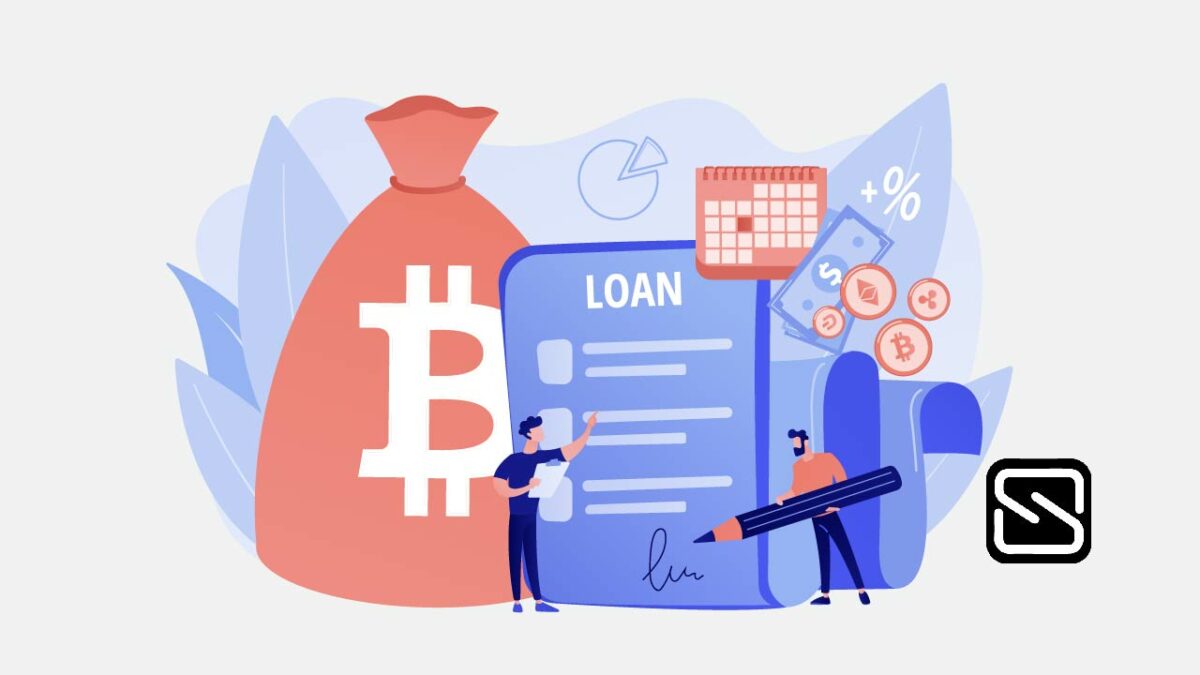
By putting up a security deposit in the form of collateral, crypto lending services allow you to borrow and invest funds in the form of digital currency or fiat money. This can be useful for fast raising funds without having to sell your crypto assets.

We present the five top crypto loan sites for 2022 in terms of fees, LTV ratios, minimum and maximum requirements, and funding conditions in this article.

The sites include;

  1. Aqru – Overall Best Crypto Loan Site for Investors 
  2. Crypto.com – Competitive APRs on Loans Against Cryptos 
  3. BlockFi – Top Provider for Instant Bitcoin Loans at Low Fees
  4. Nexo – Over 30+ Tokens Supported for Crypto Collateral Loans
  5. YouHodler – High LTV Ratio of 90% on Crypto-Backed loans

When looking for the best Bitcoin loan platform for your needs, look into the interest rates that will be charged, as well as the terms and conditions that will apply to the funding arrangement.

Furthermore, you should think about the site’s LTV ratio, as this will determine how much you can borrow against your security deposit.

The following are the top five crypto loan sites with the best terms on the aforementioned aspects.

  1. Aqru; Overall Best Crypto Loan site for investors.

Look no further than Aqru if you’re seeking for the greatest crypto loan site in terms of investment. This crypto yield farming tool allows you to generate a 12 percent income on stablecoins like USDC and Tether. Furthermore, if you have an allocation of Bitcoin or Ethereum, Aqru will pay you 7% every year.

Not only does this give one of the finest rates on the market, but all Aqru crypto savings accounts are adjustable. This means you don’t have to keep your digital assets for a certain amount of days or weeks, and you can request a withdrawal at any moment. Aqru claims it can provide such high APYs on its crypto interest accounts because it uses your digital currency to fund loans to both institutional and retail clients.

In other words, individuals who use Aqru’s crypto loan facility will pay a higher rate of interest than those who use the APY given. We especially appreciate Aqru because of its simple yet incredibly intuitive mobile app, which is available for free on the App Store and Google Play. This is linked to your primary Aqru account, allowing investors to check the value of their cryptocurrency savings accounts at any time. Finally, Aqru accepts deposits in fiat currency, so you can get started even if you don’t have any cryptocurrency.

  1. Crypto.com – Competitive APR on Crypto and loans

If you’re searching for the best crypto loan sites to borrow funds quickly and at competitive rates, look no further than Crypto.com. Although you may be familiar with Crypto.com for its user-friendly exchange services, it is also one of the major suppliers of crypto loan and interest accounts. There are no credit checks when taking out a crypto loan through this platform.

Crypto.com, like the majority of the crypto lending businesses, merely asks for a security deposit. In terms of specifics, Crypto.com provides a maximum LTV of 50%. This means that if you wanted to borrow $1,000 (3.5M Ugx) in cryptocurrency, you would only have to put up $500 (1.7M Ugx) in collateral. Another thing to keep in mind concerning Crypto.com loans is that your fees will be determined by your willingness to stake CRO, the platform’s native digital currency.

Without staking crypto, the APR on stablecoins, for example, averages 12 percent. To get this down to 8%, you’d have to stake a stunning $40,000 in CRO tokens. This is where Crypto.com really shines when it comes to supported loan markets. From Bitcoin, Ethereum, Litecoin, and EOS to Cardano, Chainlink, Polkadot, and Solana, this encompasses everything. Finally, Crypto.com, like Aqru, has a browser-based platform as well as an iOS/Android app.

  1. BlockFi – Top Provider for Instant Bitcoin loans at low fees

If you’re looking for a crypto loan platform, BlockFi is an excellent option. BlockFi is one of the greatest sites in the market for 2022 if you’re seeking quick Bitcoin loans with cheap costs. In a word, by pledging 50% LTC as collateral, you may borrow Bitcoin at a fantastic APR of 4.5 percent. Furthermore, you can agree on a duration of up to 12 months for your immediate Bitcoin loan, giving you a lot of freedom when it comes to repaying the funds.

This top-rated crypto lending platform also has the advantage of allowing you to repay your loan early without paying a fee. BlockFi also accepts Ethereum, Litecoin, and PAX Gold in addition to Bitcoin. When compared to sites like Crypto.com, however, this list of supported digital assets is sparse. Nonetheless, if you’re searching for an all-in-one crypto environment, we think BlockFi is a terrific choice.

For example, the site not only allows you to get low-cost crypto loans, but it also allows you to earn interest on your idle digital money. BlockFi also has a leading cryptocurrency exchange where you can purchase and sell crypto tokens with a single click. You might also apply for the BlockFi credit card, which allows you to use your crypto assets to purchase goods and services online or in-store. On qualified purchases, you’ll also get a 1.5 percent cashback.

  1. Nexo – Supports over 30+ tokens for crypto collateral loans

When it comes to supported tokens for the purpose of providing collateral, Nexo is one of the best crypto loan services. When setting up your security deposit, you have the option of selecting from over 30 different digital currencies, giving you a lot of freedom. This contains Uniswap, Dogecoin, The Graph, and Decentraland, as well as Bitcoin, Ethereum, Solana, and Tether.

The amount of LTV necessary for your security deposit will vary depending on the currency. For example, if you use Bitcoin or Ethereum as collateral, the LTC is 50%. This is lowered to 30% when using a less liquid coin such as The Graph or Decentraland. Nonetheless, we like that Nexo gives you the option of receiving your loaned funds in a variety of assets, including more than 40 fiat currencies and dozens of digital tokens.

When it comes to costs and prices, there are no origination fees associated with applying for a loan. APRs will range from 0% to 13.9 percent, but the exact rate will be determined by a number of criteria, including the loan’s length and the asset you intend to borrow. Nexo additionally appeals to us because of its rapid approval service and the fact that you can set your own repayment schedule. This implies that, unlike traditional loans, you will not be bound by a monthly payback schedule.

  1. YouHolder – High LTV Ratio of 90% on Crypto-Backed loans

So far, the crypto loans providers we’ve looked at have an average LTV ratio of 50%. However, this pales in comparison to YouHodler’s 90 percent guarantee. To put it another way, if you wanted to borrow $900 from the YouHodler platform, you simply needed to put up $1,000 in collateral. As a result, YouHodler allows you to get the most out of the money you have.

YouHodler is preferred since it supports over 40 different digital assets as well as a variety of fiat currencies. This means you can use crypto as collateral and obtain fiat money or digital tokens in exchange. When using the YouHodler website to borrow money, the minimum amount required is only $100. Furthermore, APRs are determined by a number of factors, including the token you use as collateral, the asset you receive as part of the loan, and the term length.

YouHodler, on the other hand, has a very easy online calculator that shows you the various rates for each statistic. Furthermore, we appreciate the fact that YouHodler provides infinite loan lengths, allowing you to choose your own repayment schedule. It’s worth downloading the YouHodler app to your smartphone to ensure that your LTC ratio stays within the acceptable limits. You can keep track of whether you need to top up your security deposit based on market conditions by doing so.

How do Crypto Loans work?

This section will explain the fundamentals of crypto loans if you’re unfamiliar with the concept.

First and foremost, you must obtain a crypto loan through a third-party source, such as those listed in the preceding sections.

The details of the loans on offer will be specified by each provider, including APRs and repayment deadlines. The highest LTV available and which tokens you can use as collateral will be stated by the crypto loan provider.

It’s better if we go through these keywords in greater depth so you understand how crypto lending sites work before you sign up for one.

Collateral

In a word, if you’re wondering how crypto loan companies can approve your funding request instantaneously without performing a credit check on you, it’s because all agreements require collateral.

This implies that before you can get your hands on the money, you’ll have to put down a security deposit. The percentage amount necessary will also be determined by the LTV.

Before we get into the details of the LTV, it’s important to realize that the best crypto loan sites for 2022 accept a diverse range of assets as collateral.

This means you won’t need to go via an exchange to get a qualified cryptocurrency if the digital token you’re already holding is supported.

Receiving Asset

The greatest crypto loan businesses in the industry give you the option of receiving your payments in either fiat money or digital tokens.

For example, if you need cash and don’t want to liquidate your digital token holdings, you can choose to receive your earnings through a bank transfer.

You can also choose to get the payments in digital tokens if your aim for taking out a loan is to grow the amount of cryptocurrency you hold (more on this later).

APR (Annual Percentage Rate)

Since crypto lending sites are in the business of making money, you will have to pay interest in order to borrow funds. This will be expressed as a percentage of the APR (Annual Percentage Rate).

The loan agreement is more competitive for you if the APR is lower.

LTV (Loan to Value)

LTV (Loan to Value) is a term used by crypto loan businesses to describe the amount of money you can borrow in relation to the size of your collateral.

LTVs of up to 50% are available at Crypto.com, for example. As a result, if your security deposit is $2,000 in Bitcoin, you may be eligible for a $1,000 loan.

The LTV at YouHodler might be as high as 90%. This means you can borrow up to $1,800 with the same $2,000 security deposit.

Types of Crypto Loans

There are various different types of crypto loans available on the internet, which we go over in greater detail in the sections below:

Crypto Collateral Loans

Almost every crypto lending site you come across will need collateral, with the exception of the odd outlier. After all, this is the only way the platform can approve a loan without checking your credit.

Crypto Loans without Crypto

You will be disappointed if you are looking for crypto loans with no collateral. This is because, in today’s crypto-backed financing ecosystem, all platforms require a security deposit before approving a loan.

With that stated, as decentralized finance (DeFi) capabilities increase, there is a good probability that in the not-too-distant future, users may be able to obtain crypto loans without the need for collateral, credit checks, or verification documentation.

It’s also worth noting that a small handful of platforms now offer anonymous bitcoin loans. None of these platforms, however, have a good reputation in the industry. As a result, after registering with the top crypto loan sites on the market, you will be required to go through a brief KYC process.

Crypto Flash Loans

There is a small exception to the rule that crypto loans cannot be obtained without collateral. This is because a concept known as crypto flash loans is now supported by numerous DeFi platforms.

In a word, this allows you to borrow cryptocurrency through a smart contract arrangement without having to put up any collateral.

However, there is a catch to these short-term crypto loans: if the money is not repaid within the agreed-upon deadline, the smart contract will reverse the transaction.

Custodial Vs Non Custodial Crypto Loans

When learning how crypto loans work, the next thing to consider is whether you want to use a custodial or non-custodial platform.

In layman’s terms, if you use a custodial crypto lending service, you’re dealing with a centralized platform.

In other words, the platform will handle deposits and withdrawals, loan fund distribution, repayments, interest rate and LTV setting, and more.

Custodial services are available on all five of the finest crypto loan sites we evaluated today.

Non-custodial crypto lending websites, on the other hand, are decentralized. This is because, as we discussed in the section on crypto flash loans above, the funding arrangement is carried out through a smart contract.

How to minimize risk with Crypto Lending?

When compared to typical lending choices, the crypto lending industry is still relatively young, which means there is an added level of risk when attempting to achieve the higher yields on offer. Because crypto lending entails entrusting your funds to third parties, there is always the risk that they will default, leaving you out of money. There are, however, some techniques you can do to reduce the possibilities of this happening.

For starters, rather than using just one DeFi lending network, you can sign up and deposit your crypto with several. This strategy allows you to spread the risk across multiple platforms, which implies that if one platform experiences non-payment or default, the others are likely to compensate. The sign-up process for most of the finest crypto apps that provide these services is streamlined, making it quick and easy to diversify in this way.

Another option is to exclusively collaborate with well-known and respected platforms. These platforms ensure that third parties who use your cryptocurrency are monitored and appraised in advance, lowering the risk of non-payment. Finally, certain platforms may contain a reserve fund that is activated if a borrower defaults, providing lenders with an additional layer of security.

What Crypto Currencies can I borrow?

What digital tokens you can use to get a crypto loan will ultimately be determined by the platform you choose. For example, although some of the crypto lending services we studied before accept dozens of digital currencies as collateral, others just accept a few.

Having said that, almost all major crypto loan sites will accept Bitcoin and Ethereum as collateral payments. Tether and USDT are examples of stablecoins that are often supported.

If you’re currently holding a less liquid digital asset and your crypto loan site allows it, your LTV ratio may suffer as a result.

For example, Bitcoin security deposits at Nexo will get you access to a maximum LTV of 50%. When depositing Decentraland, however, this is lowered to 30%.

The good news is that there is a simple solution in place if your favorite platform does not support the digital currency you already hold – or if the associated asset does not deliver your desired LTV.

That is, you can easily exchange your present tokens for a large-cap digital asset such as Bitcoin.

How to borrow Crypto Currencies?

If you’re ready to start earning interest on your idle digital token holdings by lending bitcoin, the instructions below will get you set up with Aqru in under five minutes.

Step 1: Open an Account

As previously said, all legal crypto lending services will ask you to create an account. Aqru is no exception in this regard.

As a result, the first step is to go to the Aqru website and offer your personal information to the platform.

After that, you’ll have to go through a brief verification process that only requires you to upload some identification.

Step 2: Deposit Crypto or Fiat

After you’ve created an account, you’ll be prompted to make a deposit. Aqru accepts Bitcoin, Ethereum, and a number of stablecoins as deposits. You can also make a fiat money deposit of at least €100.

Step 3: Earn Interest from Crypto loans

After you’ve placed a crypto deposit, you’ll start earning a 7% APY on Bitcoin and Ethereum, and a 12% APY on stablecoins.

You can choose which crypto savings account you want to convert your funds to if you financed your account with fiat money.

Are Bitcoins safe?

Crypto loans are never 100 percent safe from the standpoint of both borrowers and investors. As a result, as compared to traditional financial institutions, the finest crypto loan services are able to provide far better terms.

For Example

If you want to borrow money from a crypto loan service, you’ll have to put your digital tokens up as collateral. The obvious risk is that you are entrusting your security deposit to the website in question.-

The major risk to be aware of as an investor is that your funds will be used to enable crypto loans. And, as with any loan, there is always the possibility that the borrower would default.

This is why it’s critical to complete your research before choosing the best crypto loan site for you. Consider spreading your portfolio over multiple platforms to lower your risk of losing money.

In conclusion, the top cryptocurrency lending sites serve as a conduit between borrowers and investors.

If you’re seeking a loan, your application will be granted right away, with no credit checks or financial proof required. Instead, a security deposit in the form of collateral is all that is required.